
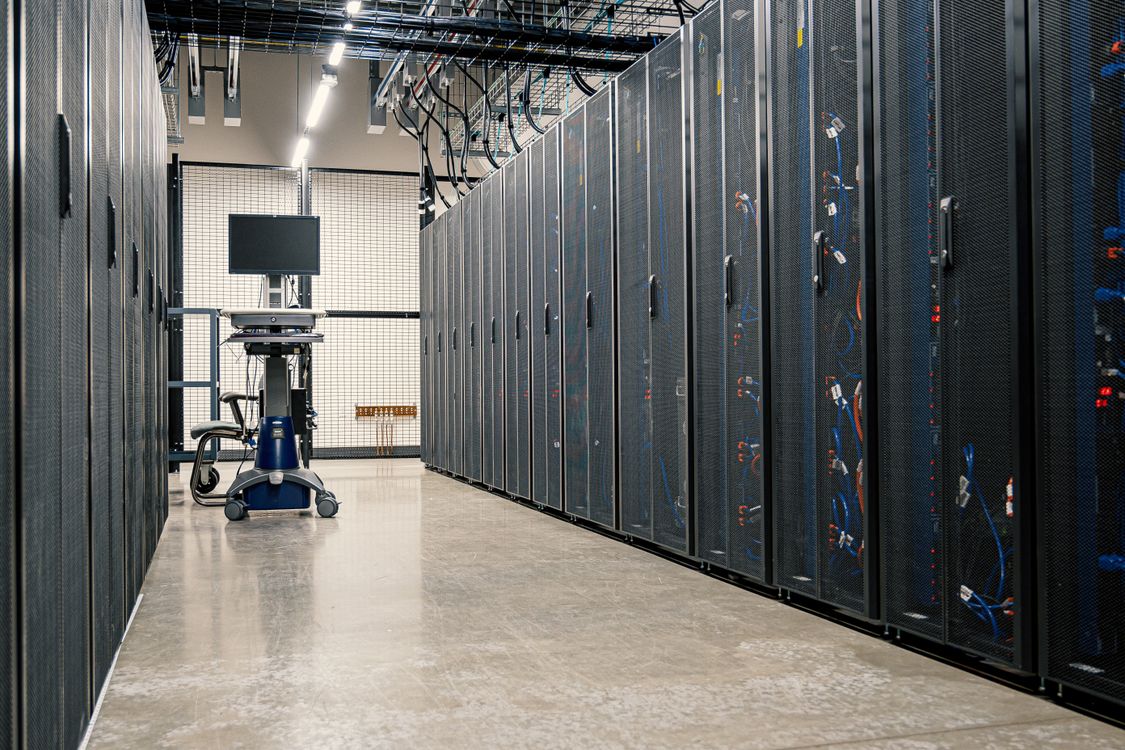
Making rising demand visible
The International Energy Agency's (IEA) 2026 update estimates global data-centre electricity use at approximately 485 terawatt-hours (TWh) in 2025 and projects that consumption could approach 950 TWh by 2030 in its base scenario. These are estimates and projections for the data-centre sector as a whole. Presenting them as electricity consumed exclusively by generative AI would be misleading: data centres host a wide range of digital workloads.
Greater electricity use does not necessarily mean carbon emissions rise at the same rate. Power-generation mixes, renewable procurement, utilisation, hardware efficiency and local conditions all affect the outcome. This makes choices about location and infrastructure important for the environmental assessment of digital services.
Why water is harder to measure
Data centres use different cooling technologies. Some rely on systems that consume water through evaporation; others use alternative thermal designs. Electricity generation has its own water implications, while manufacturing the required equipment contributes to the broader life-cycle footprint. Accordingly, a single universal figure for the water use of “one AI query” rarely provides a reliable basis for comparison.
Water withdrawal and water consumption are not interchangeable. A unit of water consumption in a water-stressed basin can have very different implications from the same quantity in a region with abundant resources. A meaningful assessment should specify facility location, time period, cooling technology, climatic conditions and reporting boundaries.
Three scales require different calculations
At the facility scale, organisations can measure total electricity demand, water withdrawals, water consumption, utilisation and cooling-system characteristics. At the workload scale, analysts estimate the shares attributable to training, inference, storage and data transfer. At the service scale, they must explain how computing activity is allocated to a user-facing output. Moving directly between these scales without an allocation method produces false precision.
Power Usage Effectiveness (PUE) and Water Usage Effectiveness (WUE) can support facility comparisons. They do not, by themselves, describe life-cycle emissions or local water stress. A more efficient facility can still consume more resources overall if the amount of work processed grows sufficiently.
Why does this matter in Türkiye?
AI adoption, cloud services, data centres and industrial digitalisation are developing together in Türkiye. When buying computing services, organisations should ask more than the price and speed of processing. Where is the service provided? Which electricity and water indicators are disclosed? What method underpins the emissions estimate? In areas exposed to water scarcity, local water conditions should be considered alongside electricity demand.
Two extreme interpretations should be avoided: treating AI as the sole cause of environmental challenges, or ignoring its impacts entirely. AI may also help improve efficiency, manage energy systems and estimate emissions. These potential benefits require their own evidence and indicators.
What can organisations do now?
Begin with an inventory of computing services and classify cloud-based and on-premises workloads. Request supplier electricity and water figures that specify both geography and reporting period. Technical teams can monitor changes in resource use per workload, eliminate unnecessary model calls, select appropriately sized models and report results within stable boundaries.
When information is missing, do not treat missing data as zero impact. State assumptions and uncertainty clearly. It is also worth monitoring whether efficiency gains encourage enough additional activity to increase total demand.
SustainRadar assessment
Digital transformation cannot be judged responsibly by excluding new digital services from environmental accounts. Credible disclosure for AI infrastructure reaches beyond the data-centre building to the energy supply, local water basin and life cycle of the equipment used.